
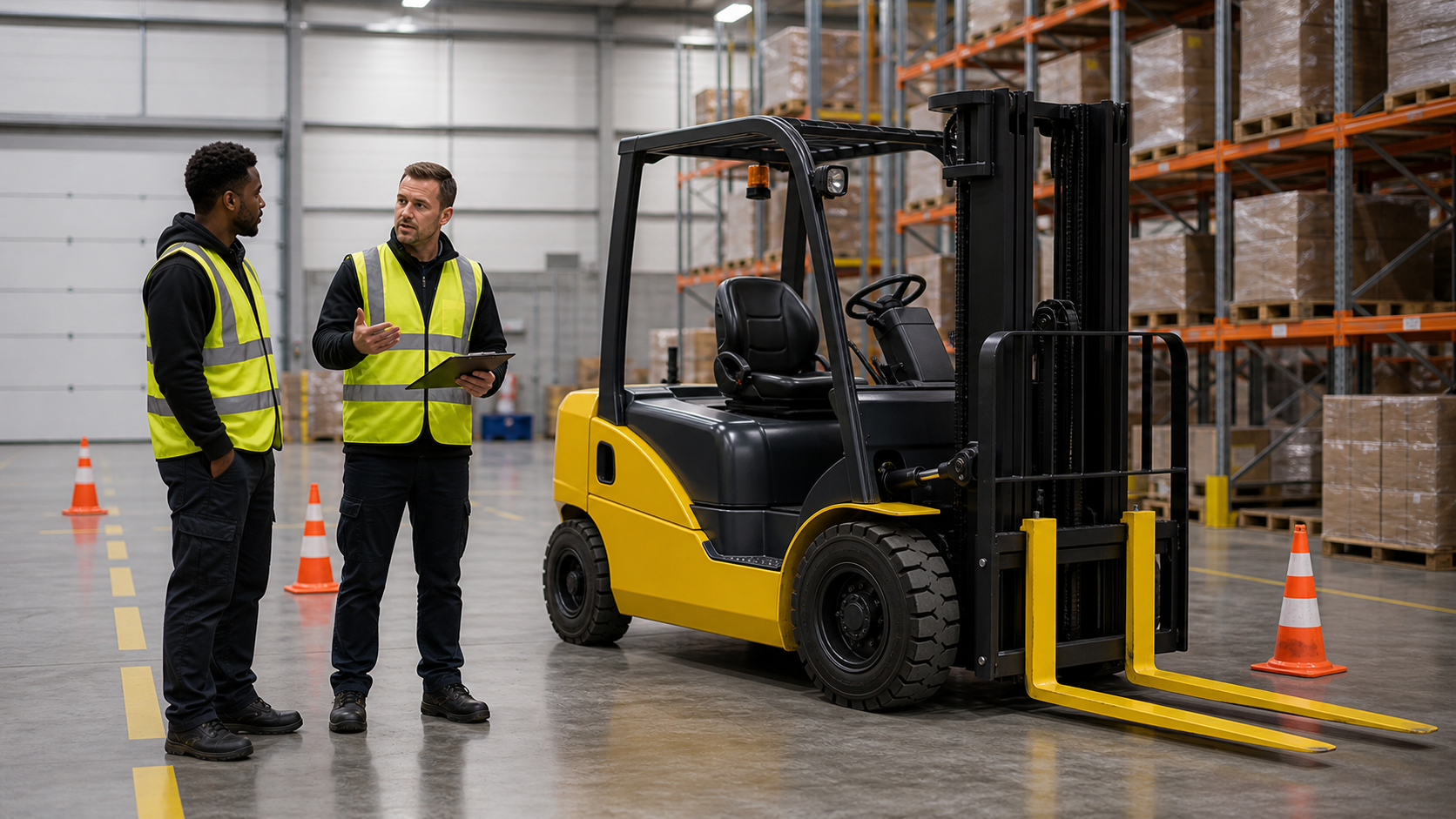
It starts before the truck moves
A good novice course does not begin with speed or productivity. It begins with responsibilities, hazards, basic safety principles and the reasons checks matter. New operators need to understand how the truck behaves, how loads affect stability and why workplace rules are there.
Once the basics are in place, training can progress into controls, steering, stopping, travelling, stacking and de-stacking using the relevant truck type.
What new operators should expect
- Plain explanations of controls, checks and safe operating habits.
- Practical exercises that build confidence gradually.
- Feedback on positioning, observation and load handling.
- Assessment preparation matched to the equipment category.
Confidence matters, but so does caution
New operators should finish training with a more structured understanding of safe operation, but they still need workplace familiarisation and supervision. The site layout, loads, pedestrian routes and local procedures must be explained before they work independently.
Useful reference: HSE describes basic training, specific job training and familiarisation on its lift-truck training page.