
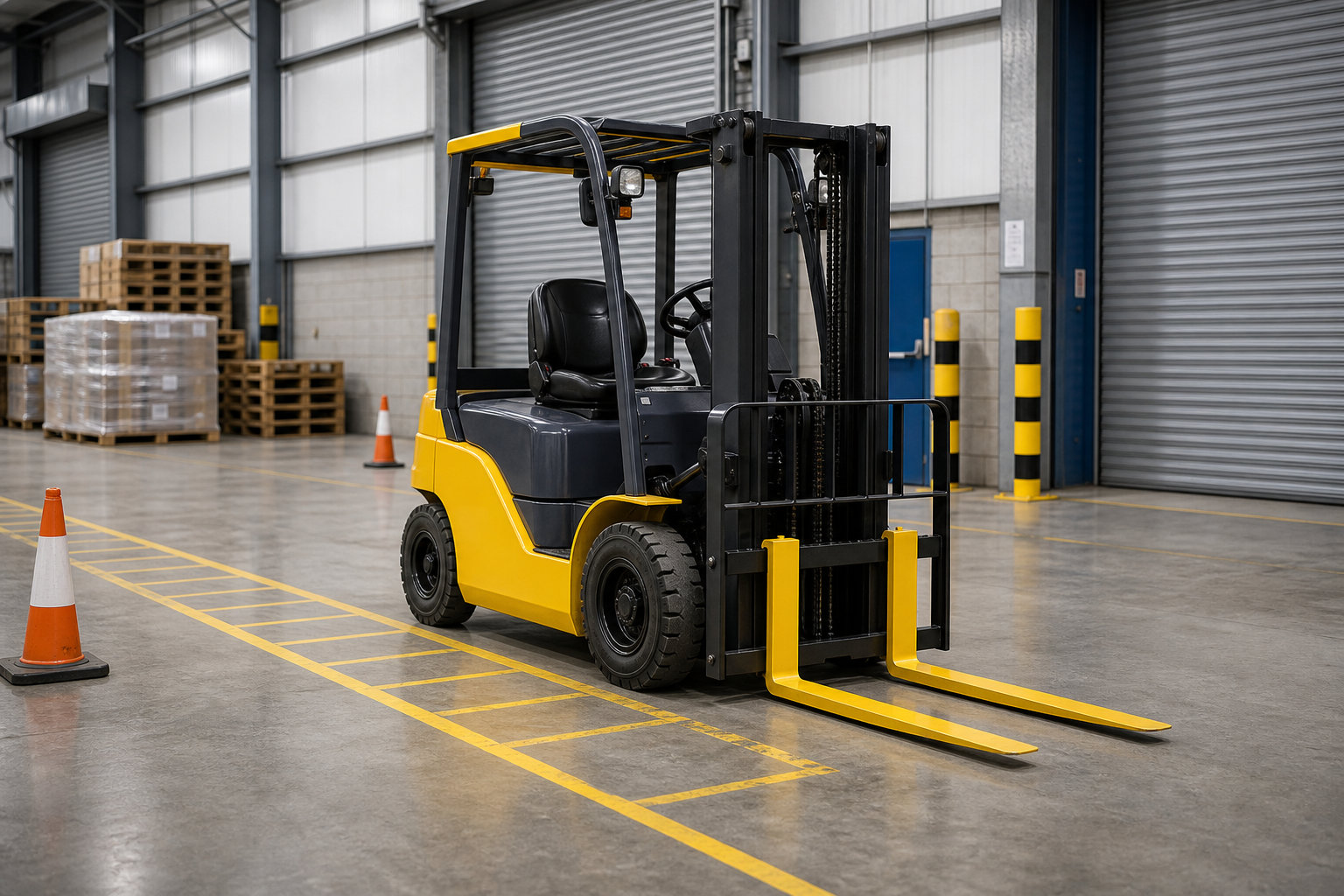
One truck type, many working conditions
Counterbalance forklifts are used across Sheffield manufacturing, distribution, construction supply and yard operations. The basic controls may look familiar from site to site, but the risks change quickly when operators move between loading bays, pallet racking, tight yards, ramps and mixed pedestrian areas.
That is why the conversation before booking should cover the truck category, the operator's current level and the main tasks they perform. A full novice route, an experienced operator route, refresher training or conversion training can all be appropriate depending on the person and the equipment.
Common training focus areas
- Pre-use checks and reporting defects before the truck is used.
- Steering, braking, stability and load handling with the forks at safe travel height.
- Stacking, de-stacking and working near racking, trailers or loading doors.
- Keeping pedestrians, vehicles and the operator separated wherever possible.
Make training useful after the course
Employers should reinforce the training on site with clear traffic routes, supervision, safe systems of work and familiarisation with local hazards. Good counterbalance training is a starting point for safe working habits, not a substitute for managing the workplace.
Useful reference: HSE guidance explains that lift-truck training should include basic training, specific job training and familiarisation. See HSE lift-truck training.